
Employers’ Confederation of Thailand
Tel 02-385-7177
Fax 02-385-8577
NEWS & ACTIVITY












หมวด : ข่าวทั่วไป
18
อ่านแล้ว 19 ครั้ง
18 Employers’ Confederations Sign Joint Statement Opposing Three Draft Labour Protection Acts, Citing Nationwide Impact on Business Operations

18 November 2025
18 Employers’ Confederations Sign Joint Statement Opposing Three Draft Labour Protection Acts, Citing Nationwide Impact on Business Operations
18 Employers’ Confederations Sign Joint Statement Opposing Three Draft Labour Protection Acts, Citing Nationwide Impact on Business Operations
Monday, 17 November 2025 — The Employers’ Confederation of Thailand (ECOT), together with 17 other employers’ confederations — a total of 18 organizations — signed a joint statement opposing three Draft Labour Protection Acts currently under consideration, citing direct impacts on business establishments, industries, and employment systems across the country.
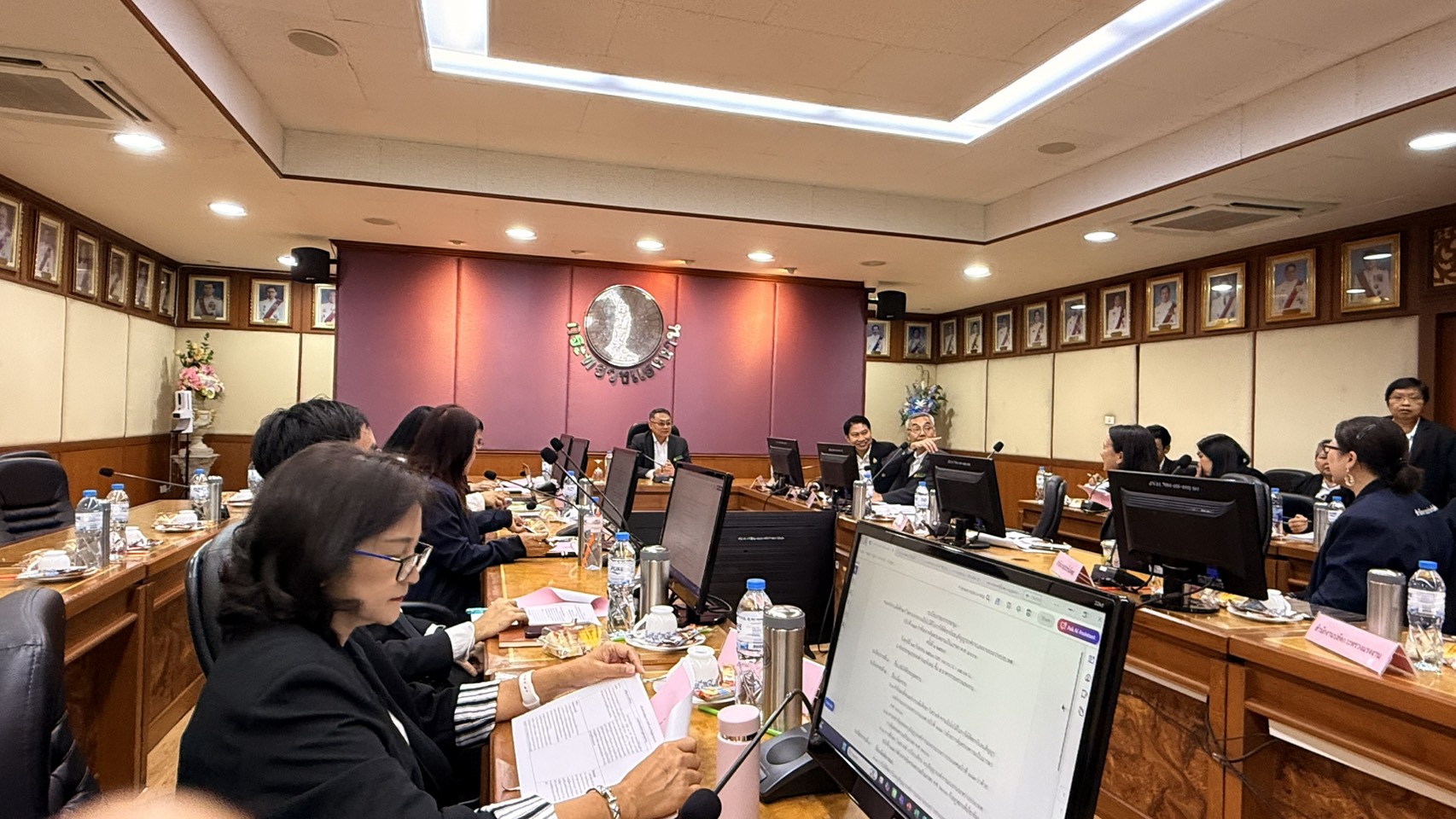
Mr. Bowornsak Klaharn represented the confederations in submitting the letter to the Ministry of Labour, requesting a review of proposed amendments to the Labour Protection Act B.E. 2541 (1998), particularly concerning the reduction of working hours and the expansion of holiday/leave entitlements. The letter was received by Ms. Treenuch Thienthong, Minister of Labour, together with Pol. Lt. Col. Wannapong Kotcharak, Permanent Secretary of the Ministry of Labour, and senior ministry executives at the 5th–floor meeting room, Department of Labour Protection and Welfare (DLPW).
A submission was also made to the Senate Committee on Labour at their meeting room.
The opposition concerns the following three draft laws:
1. Draft Labour Protection Act (Receipt No. 157/2024), proposed by Mr. Jaras Khumkhainam
Key provisions:
- Reduce weekly working hours from 48 to 40 hours
- Increase weekly holidays from 1 day to 2 days
- Expand annual leave entitlements
Reasons for opposition:
- Increases labour costs and affects business efficiency
- SMEs may be unable to absorb additional burdens, risking closures
- May negatively impact both domestic and foreign investment liquidity
- Could accelerate workforce reduction and stimulate automation adoption (AI, robotics)
2. Draft Labour Protection Act (Receipt No. 158/2024), proposed by Ms. Wannwipha Maisorn
Key provisions:
- Require equal treatment of all employees in all aspects
- Introduce menstrual leave (not counted as sick leave)
- Introduce family or close-person care leave
- Require employers to provide breastfeeding or milk-expression facilities
Reasons for opposition:
- Menstrual leave may conflict with ILO Conventions No. 100 and 111 on equality
- The term “close person” is overly broad; should be clearly defined (e.g., parents, spouse, children)
- Breastfeeding facilities may place unnecessary burdens on SMEs and service-sector businesses
3. Draft Labour Protection Act proposed by Mr. Sia Champathong and colleagues — Expansion of employer and employment definitions
Reasons for opposition:
- Disagreement with expanding the definition of “employer” to cover all employment types, as current law is already appropriate
- Opposition to introducing a definition of “monthly employment” and requiring all employees to be paid monthly, as job types vary and should be mutually agreed
- Annual mandatory minimum wage adjustments do not reflect economic realities and contradict the tripartite mechanism
- Disagreement with criminal penalties for contracts that may be interpreted as disguised employment
Recommendations from all 18 employers’ confederations
- Current economic conditions do not support additional labour-cost burdens
- More flexible measures should be used, allowing employers and employees to mutually agree rather than imposing strict legislation
- Public consultations have been insufficient, and business operators have not been adequately included
- The Labour Protection Act B.E. 2541 has already been amended multiple times and remains aligned with ILO standards; further amendments are unnecessary at this time
List of the 18 Employers’ Confederations Signing the Statement
Including nationwide employers’ confederations, such as:
- Employers’ Confederation of Thailand (ECOT)
- Employers’ Confederation of Trade and Industry of Thailand
- Employers’ Confederation of SME Industry
- Employers’ Confederation of Services–Industry–Agriculture
- Employers’ Confederation of Hotels and Tourism (Region 8)
- And other employers’ organizations — a total of 18 bodies
NEWS & ACTIVITY




Employers’ Confederation of Thailand
Tel : 0-2385-7117
Fax : 0-2385-8577